Roof-runoff routing
Downspout Drainage Help in Augusta, GA
HomeGuide publishes $150 to $350 per downspout for buried drainage systems. Use that national figure after checking the visible gutter route because a blocked elbow or short extension may define a smaller first correction.
Editorial review: July 19, 2026. Cost figures and local guidance were rechecked on that date.
Augusta Yard Drainage Help is an independent educational service that helps connect homeowners with local outdoor drainage providers. It does not perform drainage or contractor work directly. Requests may be shared with a local outdoor drainage provider when a fit is available.
Quick answer
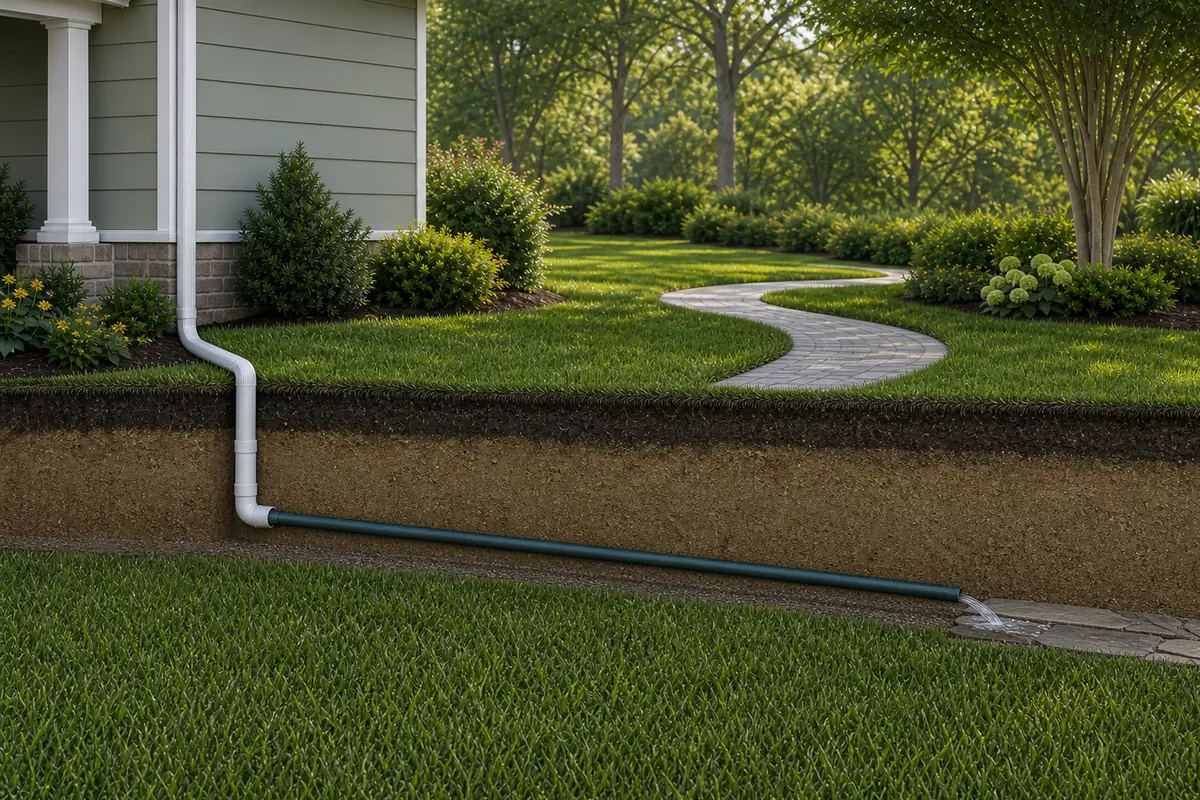
Inspect from the roof edge to the final release: gutter, outlet opening, elbow, adapter, visible or buried carrier, maintenance points, and destination. Keep concentrated roof water in solid pipe when buried. The endpoint needs positive fall, erosion control, and enough separation from walks, neighboring property, and the building.
Inspect the route in rainfall order
Watch from the ground during rain. Start with gutter overflow and roof valleys, then check downspout seams, elbows, crushed extensions, adapter openings, buried-line symptoms, and the outlet. Mark where the first defect appears. A new underground pipe cannot correct overflow that begins above the connection.
Climb the options ladder only as far as needed
A splash block manages the immediate release. A visible extension carries water farther and stays easy to inspect. Buried solid pipe protects a longer route from mowing and foot traffic. A pop-up emitter can release water near the surface at the low end. A shared carrier for several downspouts needs a separate capacity, grade, cleanout, and outlet review.
- Splash block for a short stable discharge area
- Surface extension for a visible unobstructed route
- Buried solid line when access and appearance justify excavation
- Pop-up emitter only where grade and the receiving surface support release
- Combined roof-water line only after contributing area and maintenance access are evaluated
Keep roof runoff inside solid pipe
A solid carrier prevents concentrated gutter flow from leaking along the route. Use accessible fittings or cleanouts where leaves and grit can collect or direction changes. Keep the outlet visible enough to identify erosion, blockage, settlement, or an emitter that no longer opens.
Understand what the cost figure includes
HomeGuide’s $150 to $350 per-downspout planning range covers buried systems that may lead to a bubbler pot or catch basin. A longer combined line, hardscape crossing, utility conflict, deep excavation, protected outlet, or extensive lawn repair can create a broader project than one buried extension.
Review the certified Augusta cost boundaries →
Sources: HomeGuide buried-downspout costs
Locate conflicts before fixing a buried alignment
Mechanized burial requires the Georgia 811 notice. Submit the ticket at least three business days before digging and review every member response. Standard marks stop at publicly owned facilities, so private irrigation, lighting, septic, propane, and similar lines require separate identification before the route becomes final.
Sources: Georgia 811 excavation timing · Georgia 811 private-facility guidance
Use Augusta review for a public-system assumption
Do not treat a street inlet, ditch, right-of-way, or public pipe as an automatic endpoint. Augusta Engineering oversees municipal stormwater facilities, and county code addresses private-system discharge to the public network. Confirm ownership and requirements before connecting or changing the discharge pattern.
Sources: Augusta Engineering stormwater program · Augusta-Richmond County stormwater code
Send lingering mid-yard wetness back to diagnosis
If the roof route works and the same strip stays saturated, the remaining problem belongs to the standing-water lane. That review can separate a low surface point from a restrictive soil layer before another pipe is specified.
Diagnose wet ground that remains after roof water is controlled →
Common questions
What should I inspect before burying a downspout line?
Check gutter overflow, downspout joints, elbows, the adapter, visible extensions, and the proposed outlet during rain from the ground. Fix the first defect before enlarging the scope.
How much does buried downspout drainage cost?
HomeGuide publishes $150 to $350 per downspout as a national planning range. Route length, fittings, excavation, outlet work, conflicts, and restoration can change the complete quote.
Should a buried downspout use solid pipe?
Yes for the carrier section in the typical layout. Solid pipe keeps concentrated roof runoff within the route instead of releasing it through a perforated collection trench.
Can several downspouts share one outlet line?
Sometimes. The combined roof area, pipe capacity, fall, cleanout access, and destination all need to support the added flow.
Can I connect a downspout route to a public drain?
Do not assume the connection is available. Confirm ownership and current requirements with Augusta before using or changing a public stormwater connection.
Send your drainage details
Describe where the water begins, how it moves, where it collects, and how long it remains after rain.
Your request may be shared with a local outdoor drainage provider for follow-up. Submission does not guarantee availability, price, timing, or results.